
Build a stronger record.Build a stronger foundation.
Understand personal and business credit files, identify legitimate issues, establish better habits and prepare for responsible future decisions.
Understand the file before trying to change it.
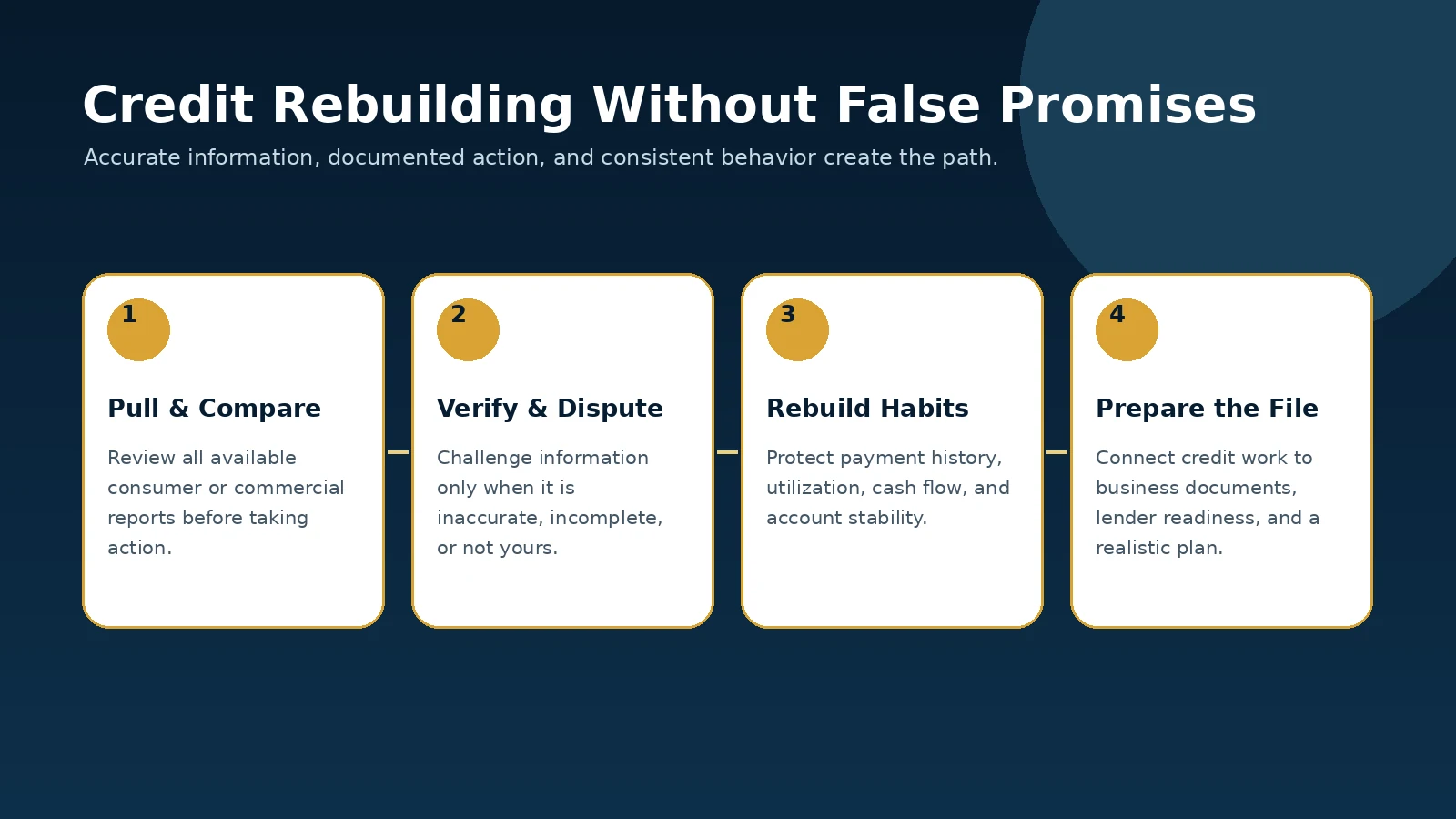
Good rebuilding begins with accurate information, consistent habits, documentation, and a realistic timeline.
Credit is a record of reported behavior—not a measure of personal worth.
The goal is not to chase a number. The goal is to understand what is being reported, correct legitimate errors, reduce preventable risk, and build habits that support the next financial decision.
- Review reports from the major consumer bureaus
- Separate confirmed facts from disputed information
- Protect payment history and reduce late-payment risk
- Plan balances and utilization instead of reacting to a score
- Limit unnecessary applications and hard inquiries
- Build a documentation file for legitimate disputes and follow-up
Personal credit and business credit overlap, but they are not the same file.
Personal Credit Rebuilding
Review consumer reports, payment history, balances, utilization, inquiries, collections, public records, identity data and legitimate dispute needs.
Explore personal credit rebuilding →Business Credit and D&B Readiness
Review business identity consistency, D-U-N-S information, trade reporting, public filings, commercial credit files and readiness for vendor or lender review.
Explore business credit readiness →A clear process without promises that cannot be controlled.
Obtain
Gather current reports and supporting records from authoritative sources.
Verify
Confirm identity information, account ownership, dates, balances, status and reporting accuracy.
Prioritize
Address active payment risk, utilization, errors, collections and application timing in the right order.
Build
Create repeatable habits, monitoring and documentation for continued progress.